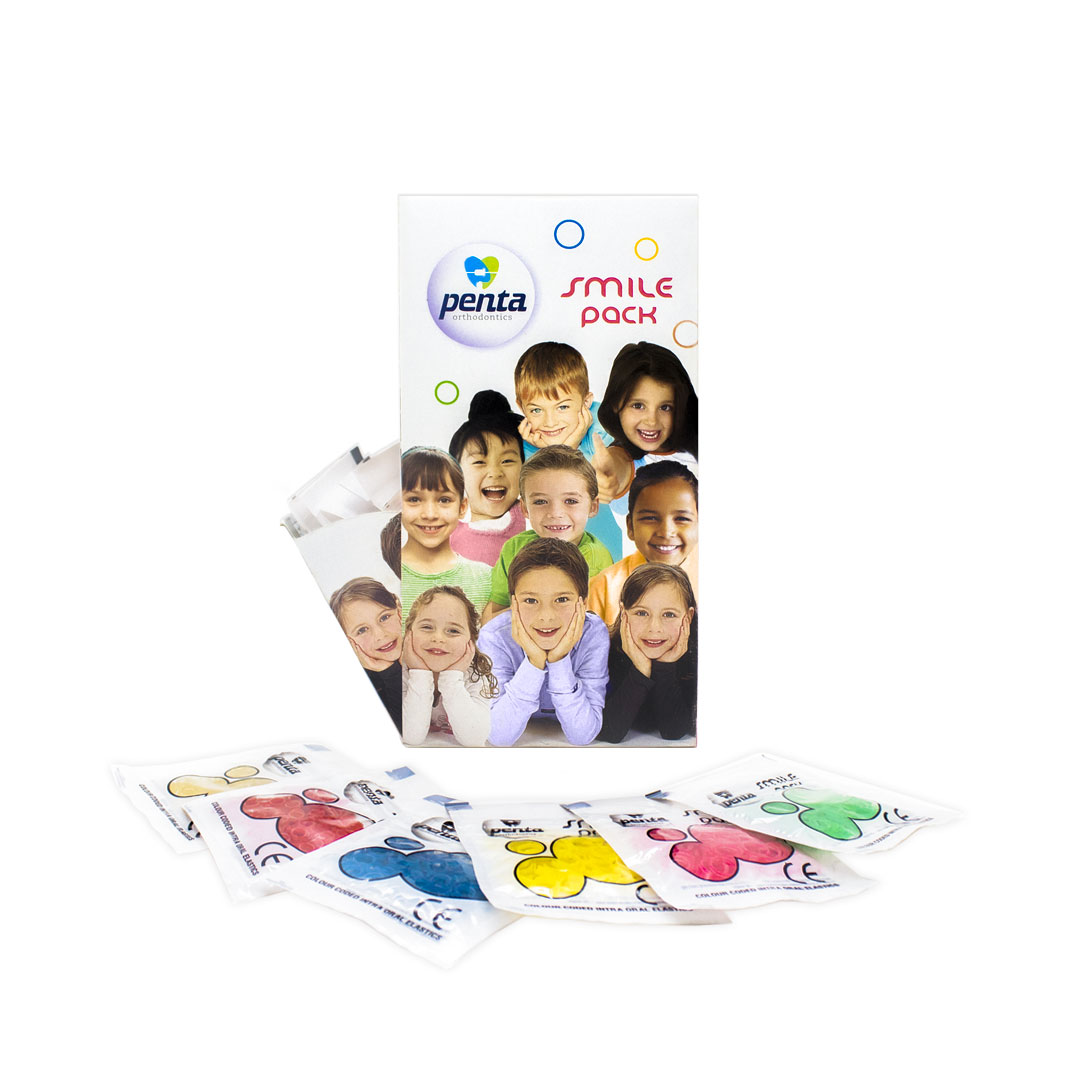
What Are Elastomerics?
These are rubber-like, stretchable materials made from FDA approved polymers that are used to apply continuous, gentle force to teeth during orthodontic treatment. They help to move teeth, close gaps, correct bite issues, and secure wires to brackets.
Available in different types, strengths, and colors, they offer both functional and aesthetic value during treatment. Their versatility makes them a preferred choice for orthodontists, especially in fixed appliance systems.
Despite their small size, they play a big role in orthodontic progress. Their ability to exert force over time without causing trauma to the teeth or gums makes them highly valuable in creating efficient, comfortable, and effective treatment plans.
Types of Orthodontic Elastomerics
There are different types of elastomerics, each serving a specific function during orthodontic treatment.
Type | Purpose |
Elastomeric Ligatures | Tie the archwire to the brackets |
Elastomeric Chains | Close spaces between teeth |
Elastomeric Separators | Create space between molars before band placement |
Elastic Modules/Rings | Apply pressure for bite correction (interarch elastics) |
Colorful Ligatures | Provide personalization, especially for children |
1. Elastomeric Ligatures
These are small rubber rings used to hold the archwire firmly in the bracket slots. They are changed during each orthodontic visit.
Benefits:
2. Elastomeric Chains (Power Chains)
Power chains are a series of connected ligatures. They apply stronger and continuous force to close gaps between teeth or rotate teeth.
Use Cases:
3. Elastomeric Separators
Also known as spacers, these are used before placing molar bands. They are inserted between teeth to create enough space for the bands. Usually placed one week before molar bands are fitted.
4. Interarch Elastics
These removable elastics connect the upper and lower arch (e.g., from upper canine to lower molar) to correct bite problems such as:
Overbite- happens when the upper front teeth overlap too far over the lower front teeth when the mouth is closed.
Underbite- occurs when the lower front teeth sit in front of the upper front teeth when the mouth is closed.
Crossbite- happens when the upper teeth sit inside the lower teeth rather than outside, either at the front (anterior crossbite) or the sides (posterior crossbite).
Interarch elastics are different from fixed elastomeric components. They are patient-dependent and require compliance.
How Do Elastomerics Work?
The working principle of elastomerics is tension and memory. Once stretched, they exert a pulling force on the teeth, guiding them toward the desired position.
Imagine a stretched rubber band , it tries to return to its original shape, and this force is used in orthodontics for controlled movement.
Advantages of Elastomerics
Easy to wear
Cost-effective
Color options improve compliance in children
Consistent force application
Sterile and biocompatible
Factors Influencing Effectiveness
Elastic strength- Light, medium, or heavy
Material quality- Medical-grade polymers provide better durability
Oral hygiene- Plaque can degrade elastomerics faster
Temperature and saliva-May affect longevity
Care and Maintenance Tips
Avoid hard/sticky foods that can dislodge elastics
Brush and floss regularly to prevent food buildup around elastomers
Follow replacement schedule as directed by your orthodontist
Notify your dentist if an elastic comes off or break
Conclusion
Elastomerics are an essential part of modern orthodontics. Whether it's ligatures, chains, or separators, they help achieve precise results by providing continuous and consistent force on teeth.
For patients, understanding how these small components work gives insight into the science behind their braces journey. For professionals, choosing the right elastomerics ensures both efficiency and patient satisfaction.
Looking for quality orthodontic elastomerics? Choose products that are durable, latex-free, and offer force consistency from start to finish. Visit us at www.pentaorthodontics.com


_9172_1293T20250522101321.png)
_9916_7500T20250616093456.jpg)